/* Buttons */
/* Paragraph */
/* HERO */
/* BOX CONTAINER */
/* BOX */
/* NO STYLE BOX (3rd box fix) */
/* TABLET */
/* MOBILE */
/* optional: hide empty box on mobile */
1. What is a Stateless Deployment?
A Stateless Deployment runs an application that does not depend on data stored locally inside a particular Pod to handle the next request.
In simple words: a stateless application does not need to remember previous requests to process new ones.
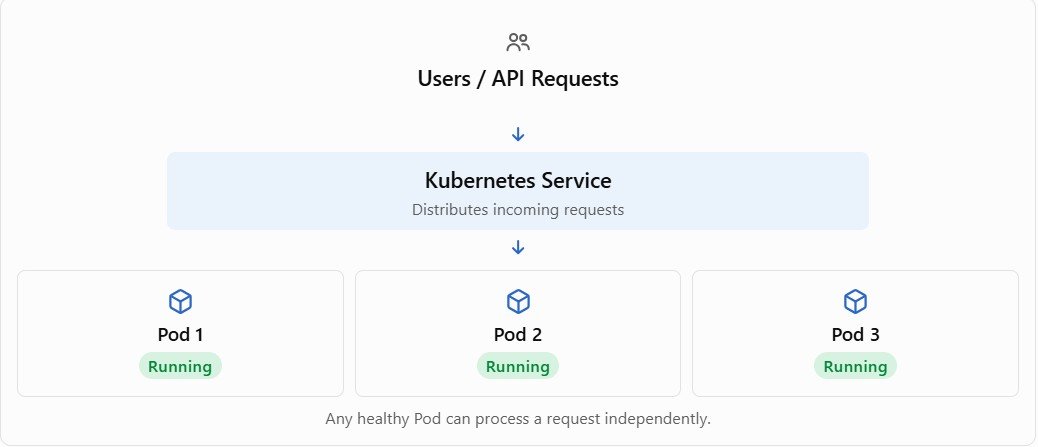
For example, imagine an online shopping application with three backend Pods:
Figure 1: Stateless Deployment with three backend Pods
If Pod 2 crashes, Kubernetes can create a replacement Pod. The application continues working because critical data is stored externally, such as in a database, rather than relying on that particular Pod.
Common examples include REST APIs, frontend applications, and authentication APIs designed to use external session storage.